Table of Contents
The race to shape the future of artificial intelligence is no longer confined to labs and boardrooms. It has entered the political arena — and two of the biggest AI players are taking notably different paths.
This week, Anthropic revealed plans to donate $20 million to a political group pushing for stronger AI regulation. Meanwhile, its chief rival, OpenAI, made it clear to employees that it has no intention of making similar political donations.
At the center of this decision is a key message: Why OpenAI insists it is not funding any Super PACs.
OpenAI’s Internal Message: Neutrality Over Political Spending
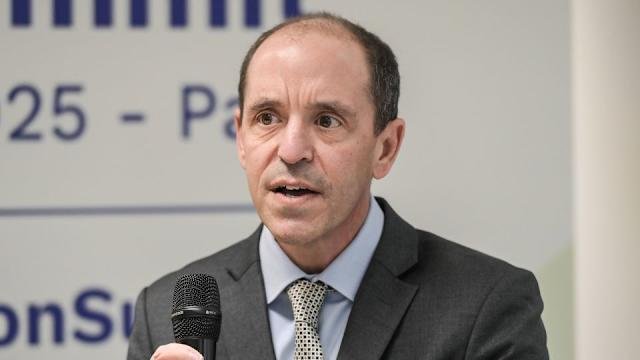
In a memo circulated to staff, OpenAI’s Chief Global Affairs Officer, Chris Lehane, emphasized that while employees are free to support political candidates or causes personally, the company itself will not step into the world of political action committees or 501(c)(4) social welfare organizations.
In interviews, Lehane explained that OpenAI wants to maintain direct oversight of how its political resources are used. By avoiding super PAC contributions, the company believes it can preserve flexibility and avoid becoming entangled in partisan battles.
According to Lehane, AI policy is too important to be reduced to party politics. The company’s leadership believes that discussions about artificial intelligence — from safety to innovation — should rise above political divisions.
High Stakes in an Election Year
The timing of this debate is significant. Both OpenAI and Anthropic are reportedly considering major initial public offerings. At the same time, lawmakers in Washington are working to establish regulatory frameworks that could govern the AI industry for the next decade or longer.
With midterm elections approaching, public concern around AI is intensifying. Voters are increasingly focused on issues like:
Job displacement due to automation
Rising energy demands from AI data centers
Data privacy concerns
The safety of advanced AI systems
While OpenAI itself is steering clear of super PAC donations, some of its executives and investors are actively engaged politically. OpenAI president and co-founder Greg Brockman and his wife have contributed $25 million to a super PAC backing Donald Trump.
Additionally, Brockman and several major OpenAI investors have collectively given more than $100 million to a bipartisan super PAC called Leading the Future. The group supports a nationwide regulatory framework for AI, rather than a patchwork of state-level laws. It has already funded advertising campaigns opposing New York Assemblyman Alex Bores, who has positioned himself as a vocal advocate for tighter AI guardrails.
Despite these individual contributions, OpenAI’s official stance remains distinct from its executives’ personal political activities — reinforcing Why OpenAI insists it is not funding any Super PACs at the corporate level.
Anthropic’s Regulatory Push
Anthropic, co-founded with a strong focus on AI safety, has long argued that regulation is essential to responsible development. Its CEO, Dario Amodei, frequently publishes essays and gives interviews highlighting potential risks associated with advanced AI systems.
The company announced that it would donate to the Public First Action super PAC, a bipartisan organization advocating for AI regulation. Anthropic explained that it does not want to remain passive while the rules governing AI are being shaped.
In its public statement, the company argued that effective policy must balance innovation with safeguards — ensuring AI benefits society while minimizing risks. Its priorities include preventing adversaries from accessing critical AI technology, promoting transparency, protecting children, and encouraging job growth.
Political Backlash and Federal Policy
Anthropic’s proactive regulatory stance has drawn criticism from some political figures. David Sacks, who serves as a White House AI adviser, has accused the company of fueling what he described as excessive state-level regulatory momentum.
Meanwhile, President Donald Trump signed an executive order last year aimed at preventing individual states from creating their own AI regulations, instead favoring a unified national policy — one that still remains under development.
This federal-versus-state debate sits at the heart of the industry’s political tension. Many companies prefer a single nationwide framework to avoid navigating multiple state laws.
Rivalry Beyond Regulation
The divide between Anthropic and OpenAI goes beyond policy. Their rivalry recently played out in the public eye when Anthropic aired a Super Bowl advertisement promoting its ad-free chatbot, Claude. Days later, OpenAI began experimenting with ads in some ChatGPT conversations — highlighting philosophical and strategic differences between the two companies.
Ultimately, the contrast reflects deeper differences in approach: Anthropic is leaning into political engagement to shape AI governance, while OpenAI is choosing institutional neutrality — at least officially.
As AI becomes one of the most transformative technologies of the decade, the question of how companies influence public policy will only grow more urgent. For now, one thing is clear: Why OpenAI insists it is not funding any Super PACs signals its determination to remain publicly nonpartisan — even as individuals within its orbit take strong political positions.