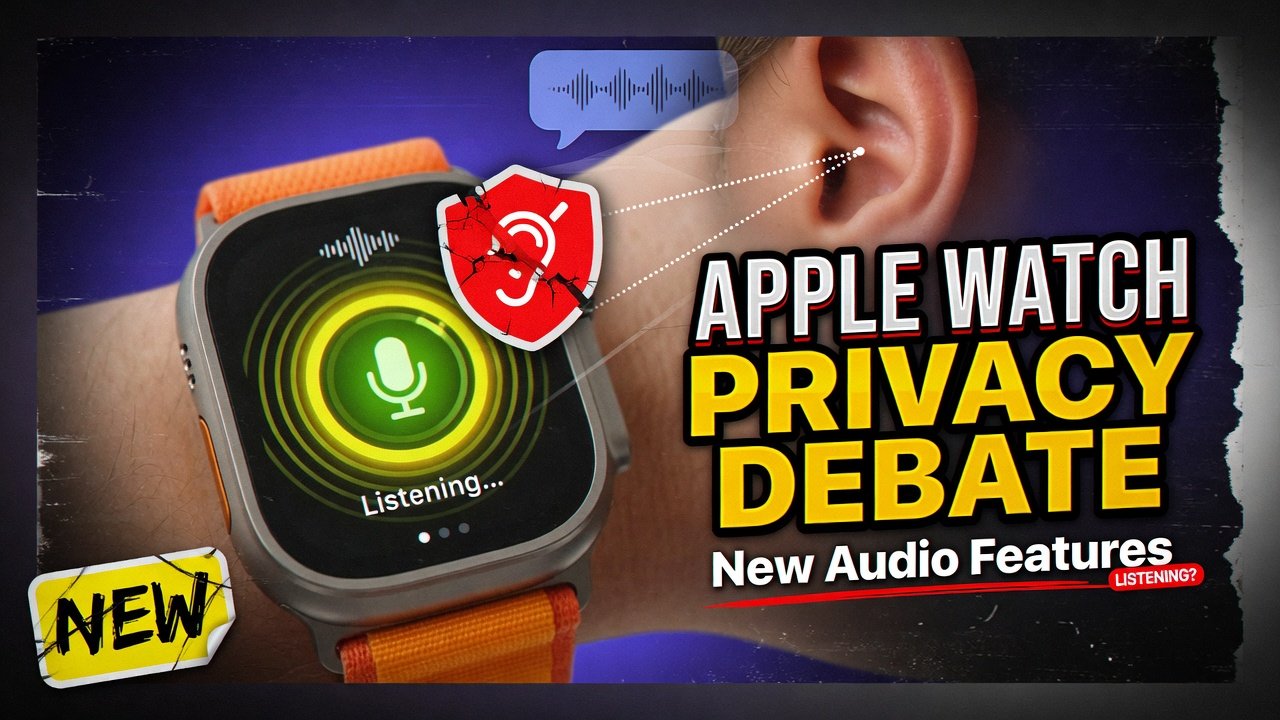
Apple Watch Privacy Debate Grows Over New AI Listening Features
The Apple Watch privacy debate has intensified following Apple’s introduction of new AI-powered audio features on the Apple Watch Series 12 and Apple Watch Ultra 4. The new tools allow the smartwatch to use its built-in microphone to recognize sounds, revisit recent conversations and generate high-level notes.
Apple introduced the features during its September 9, 2026 product event as part of a broader push to bring Apple Intelligence capabilities directly to wearable devices. The company says the technology was designed with privacy and security protections at its core. However, critics and privacy-focused observers are questioning what it means for an everyday smartwatch to have the ability to listen to conversations and summarize them.
What Is Causing the Apple Watch Privacy Debate?
The main concern centers on Siri Recap, a new feature designed to help users remember important parts of conversations.
When enabled, Siri Recap can listen for conversations and create a high-level summary that includes a title and key points. Apple says users can choose whether the feature is enabled, set specific times or locations for it to take notes, or turn it off completely. The summaries can later be reviewed through the Siri app on the Apple Watch or iPhone.
That functionality has nevertheless raised questions because conversations may involve people who did not choose to have their speech processed by an AI-powered device.
Unlike a traditional voice recorder that requires an obvious recording action, a smartwatch is already worn throughout the day. Critics argue that this could make conversations feel different when one participant is wearing a device capable of ambient listening.
How Siri Recap Works
Siri Recap is part of Apple’s new Audio Intelligence system. The feature is intended to generate a short summary rather than provide a complete transcript of an entire conversation.
Apple says the system can determine when speech is occurring without creating a permanent recording. Audio is temporarily processed through a protected hardware environment in the watch before being transferred securely for further processing when required.
The company also says Siri Recap is designed to avoid identifying individual speakers and to filter out certain sensitive information.
This means Apple’s approach is different from simply storing every conversation as an audio file. Instead, the company is attempting to process the information temporarily and retain only the useful summary that the user chooses to keep.
Apple Says Raw Audio Is Not Stored
Apple has strongly emphasized privacy in response to concerns surrounding the new features.
According to Apple, Audio Intelligence features do not create or store audio recordings. Raw audio used for processing is inaccessible to the operating system, third-party apps, the user and Apple itself. The S11 chip in the Apple Watch Series 12 includes a Secure Exclave designed to isolate audio processing from the rest of the system before the data is deleted.
Apple also says Siri Recap summaries and Live Rewind text snippets are protected with end-to-end encryption when synchronized through iCloud.
The company has therefore positioned the technology as an example of privacy-focused AI rather than conventional always-on recording.
What Is Live Rewind?
Another feature contributing to the Apple Watch privacy debate is Live Rewind.
Live Rewind allows users to double-press the Digital Crown and retrieve a text snippet representing the previous 15 seconds of conversation. It is designed for situations where someone may have missed something that was just said, such as an instruction in a noisy restaurant or an important detail during a conversation.
Apple says Live Rewind does not permanently store raw audio.
The feature also includes a visible and audible notification when activated. Apple says the watch produces a chime and displays an animation and microphone indicator, even when the device is on silent mode. This is intended to make the feature harder to use covertly around other people.
Why Privacy Critics Are Still Concerned
Apple’s technical safeguards address how the data is processed, but critics are also raising a broader question: should wearable devices routinely listen to conversations in the first place?
Privacy concerns do not necessarily depend on whether Apple stores raw audio. A conversation can contain personal, financial, professional or confidential information even if the resulting data is converted into a short summary.
WIRED noted that the technology highlights a broader shift toward AI systems becoming increasingly present in everyday devices. The concern is not simply whether Apple has adequate security controls, but also how society will respond as microphones, cameras and AI assistants become increasingly embedded in ordinary accessories.
The issue becomes particularly complicated in workplaces, medical settings, private homes and other environments where conversations may contain sensitive information.
Apple Watch Is Moving Beyond Fitness Tracking
The controversy also reflects how dramatically smartwatches are evolving.
The Apple Watch Series 12 is no longer positioned only as a fitness tracker or notification device. Apple’s new features turn it into an AI assistant capable of understanding aspects of the user’s surroundings and conversations.
Alongside Siri Recap and Live Rewind, Apple introduced enhanced sound recognition and automatic music recognition. Sound Recognition can identify sounds such as sirens, alarms, doorbells and a crying baby, while the updated music recognition system can automatically identify songs.
These capabilities could provide genuine accessibility and convenience benefits, particularly for users who need help recognizing important sounds or remembering information.
At the same time, the more context a device can understand, the more important transparency and user control become.
Users Can Turn the Features Off
One important point in the Apple Watch privacy debate is that Apple’s new conversation features are not presented as mandatory.
Apple says users can turn Siri Recap on or off through Control Centre and can determine when the feature should take notes. The company also describes the Audio Intelligence features as opt-in.
Siri Recap and Live Rewind are scheduled to arrive in beta later in 2026, meaning Apple’s implementation and user experience could continue to evolve following initial feedback.
The Bigger Question for Wearable AI
The debate surrounding the Apple Watch Series 12 could become part of a much larger discussion about wearable AI.
As smartphones, watches, earbuds and other devices gain microphones and increasingly powerful AI processors, users are gaining new ways to capture and understand information around them.
The challenge is creating technology that is useful without making people feel that private conversations are automatically becoming data.
Apple has attempted to address that concern through local processing, secure hardware, encryption, temporary audio handling and visible notifications. But privacy is also a social issue, not just a technical one.
For Apple Watch users, the most important question may ultimately be simple: Is the convenience of an AI-powered conversation assistant worth having a microphone capable of processing the conversations happening around you?
That question is likely to remain at the center of the Apple Watch privacy debate as Siri Recap and Live Rewind become available to users later this year.
Key Takeaway
The new Apple Watch features do not amount to a conventional voice recorder. Apple says raw audio is not stored, processing is protected by the S11 chip’s Secure Exclave, and users can control when features such as Siri Recap are active.
However, the ability of a widely worn smartwatch to listen for conversations and automatically generate notes represents a significant change in how wearable technology interacts with private surroundings. That distinction between technical privacy protection and the perception of being listened to is what makes the Apple Watch privacy debate particularly important.
FAQs
1. What is causing the Apple Watch privacy debate?
The debate is mainly driven by new Audio Intelligence features that allow the Apple Watch to process surrounding audio, summarize conversations and retrieve recent speech.
2. What is Siri Recap on Apple Watch?
Siri Recap is an AI feature that creates high-level notes from conversations, including a title, summary and key points.
3. Does Apple Watch record conversations?
Apple says its new Audio Intelligence features do not create or store raw audio recordings. Audio is temporarily processed within Apple’s secure hardware environment.
4. What is Live Rewind?
Live Rewind allows users to retrieve a text snippet of the previous 15 seconds of conversation by double-pressing the Digital Crown.
5. Can Siri Recap be turned off?
Yes. Apple says users can turn Siri Recap on or off and can control where and when it takes notes.
6. Does Apple identify people speaking?
Apple says its Audio Intelligence features are designed not to identify or attribute individual speakers.
7. Does Live Rewind alert other people?
Apple says Live Rewind produces an audible chime and displays a visual indicator when activated, including when the watch is on silent mode.
8. Is Siri Recap available now?
Apple says Siri Recap and Live Rewind are coming in beta later in 2026.
9. Which Apple Watches support the new audio features?
The new Audio Intelligence features are being introduced for the Apple Watch Series 12 and Apple Watch Ultra 4.
10. Why are privacy experts concerned if Apple does not store raw audio?
Privacy concerns also involve the broader idea of wearable devices processing conversations in everyday environments. Even when raw recordings are not permanently stored, conversations may contain sensitive information, making transparency and user control important.
- NASA’s New Space Telescope Begins Journey to Unlock Thousands of New Worlds
- How Snehanshu Kumar Is Using AI to Make Human Wisdom Last Forever
- Russia announces it has restricted access to WhatsApp as part of a broader crackdown on social media platforms
- Pentagon Uses Polygraph Tests on 50 Joint Staff Members in Classified Leak Hunt