Table of Contents
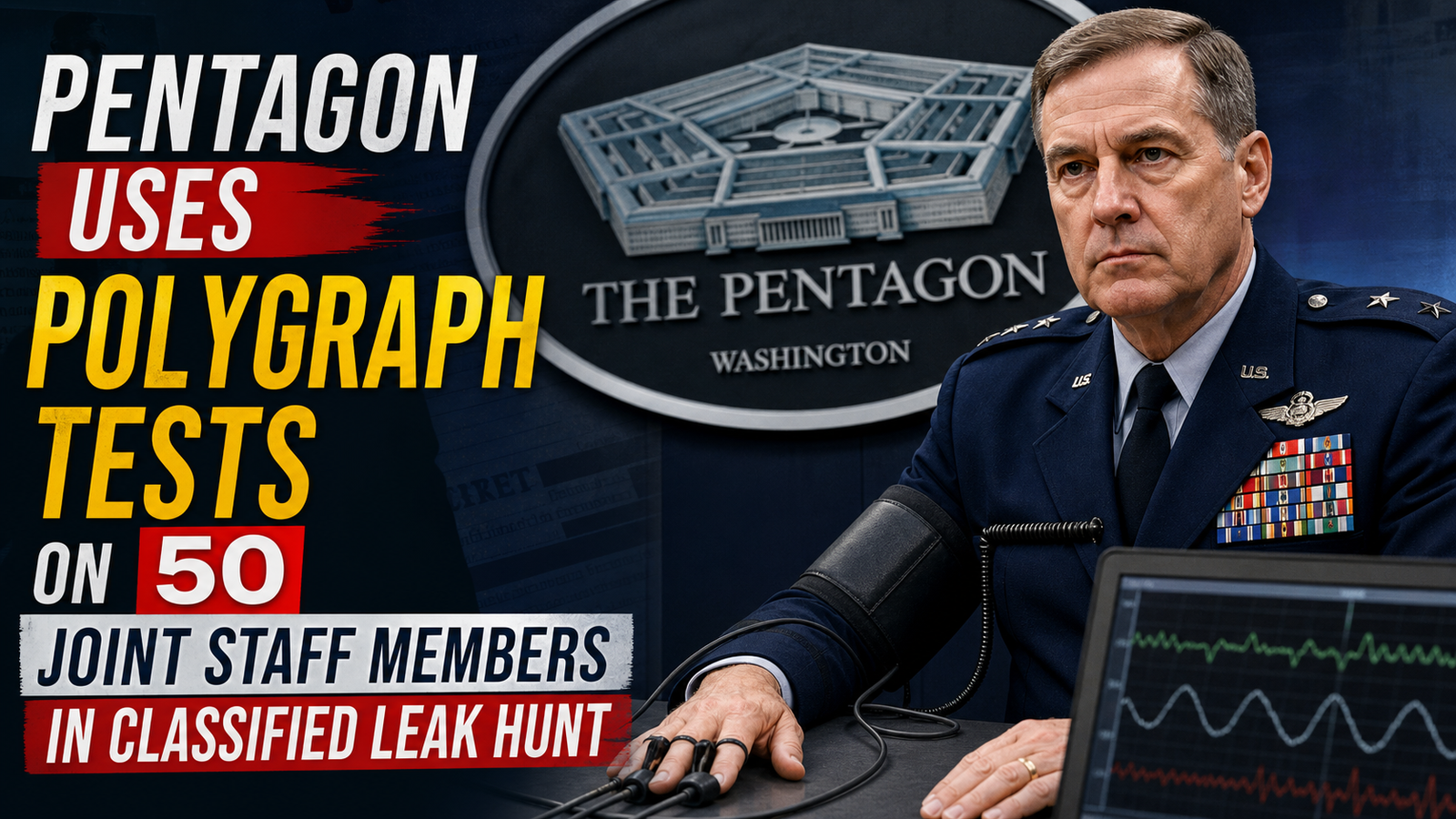
Pentagon Uses Polygraph Tests on 50 Joint Staff Members in Classified Leak Hunt
The Pentagon has reportedly expanded its investigation into unauthorized disclosures by subjecting roughly 50 members of the U.S. military’s Joint Staff to polygraph tests, as officials continue searching for the source of sensitive information reaching journalists.
The Pentagon polygraph tests were reportedly conducted in August as investigators examined possible leaks involving classified information and sensitive details about U.S. military capabilities. The investigation comes amid growing concern within the Department of Defense over unauthorized disclosures.
The move represents a significant escalation in the Pentagon’s effort to identify people who may have provided restricted information to the media.
Pentagon Polygraph Tests Target Joint Staff Personnel
According to reports, approximately 50 military officers and civilian employees working with the Joint Staff were questioned through polygraph examinations.
The Joint Staff is a key part of the U.S. military structure and supports the Chairman of the Joint Chiefs of Staff in coordinating military operations and strategic planning.
Investigators reportedly asked personnel whether they had provided classified or sensitive information to journalists, including information related to U.S. military stockpiles.
The testing was part of a broader effort to determine how sensitive information made its way into news reports.
Investigation Follows Reports About U.S. Military Weapons Stocks
The latest leak investigation follows media reports about declining stocks of certain critical U.S. munitions during the ongoing conflict involving Iran.
Reports have focused on supplies including long-range missiles and Patriot interceptors, raising questions about the pressure that sustained military operations could place on U.S. weapons inventories.
Because detailed information about military stockpiles is closely protected, officials have treated the disclosures as a serious national security matter.
The Pentagon has not publicly confirmed every detail of the investigation, but spokesperson Sean Parnell said the department takes leaks of classified national security information extremely seriously and investigates them accordingly.
Why the Pentagon Is Taking Leaks Seriously
Unauthorized disclosures can expose sensitive information about military readiness, intelligence capabilities and operational planning.
Even information that does not reveal a specific military operation can become sensitive when combined with other publicly available details.
For the Pentagon, controlling access to classified information is therefore a central part of protecting national security.
The current investigation reflects the administration’s broader effort to identify and discourage unauthorized disclosures from inside the Defense Department.
Polygraph Tests Become a Controversial Tool
The use of polygraph examinations in government leak investigations has long been controversial.
A polygraph attempts to measure physiological responses while a person answers questions. Investigators can use the results as one part of an inquiry, although the tests are not generally considered definitive proof that someone has lied.
The Pentagon has previously considered expanding the use of polygraph examinations as part of efforts to prevent unauthorized disclosures.
In 2025, the Defense Department considered broader random polygraph testing and nondisclosure requirements covering thousands of personnel at the Pentagon and Joint Staff.
Pentagon Leak Crackdown Has Been Growing
The latest testing is not an isolated development.
The Pentagon has been under increasing pressure to prevent sensitive information from reaching the press, particularly following several high-profile controversies involving classified or operational information.
Earlier leak investigations under Defense Secretary Pete Hegseth also involved polygraph examinations of Pentagon personnel and aides.
Those earlier efforts generated internal disagreements over how the tests were being used and whether certain individuals were being unfairly targeted.
The latest investigation indicates that the administration remains focused on identifying unauthorized sources.
What Information Was Leaked?
Recent reporting has primarily connected the current investigation to disclosures about U.S. military ammunition and weapons inventories.
Media reports had described concerns surrounding supplies of long-range missiles and Patriot interceptors during the Iran conflict.
Because the user-provided description also refers to sensitive intelligence software, satellite surveillance feeds and West Asia defense operations, those specific categories should be treated cautiously unless separately confirmed by official sources.
The broader issue remains the unauthorized disclosure of sensitive defense information.
Around 50 People Were Tested
The reported number of approximately 50 people is notable because the Joint Staff includes between roughly 1,500 and 2,000 officers and officials.
That means the polygraph examinations involved a relatively small portion of the overall Joint Staff, apparently selected as part of the leak investigation.
Investigators were reportedly trying to determine whether individuals had communicated sensitive information to members of the media.
The testing does not mean that all those examined were accused of leaking classified information. Being questioned or tested can be part of an investigative process designed to narrow down possible sources.
Pentagon Says It Takes Classified Leaks Seriously
Pentagon officials have emphasized the seriousness of unauthorized disclosures involving national security information.
The department has generally avoided discussing individual personnel investigations publicly, citing the sensitive nature of ongoing inquiries.
That makes it difficult to determine exactly how many people remain under investigation or whether officials have identified a suspected source.
The Pentagon’s position is that leaks involving classified information can potentially threaten military operations and national security.
Trump Administration Intensifies Focus on Leaks
The latest investigation also fits into a wider Trump administration effort to tighten control over classified and sensitive government information.
Officials have increasingly focused on preventing employees from providing unauthorized information to journalists.
The Pentagon has previously explored measures including nondisclosure agreements, random polygraph testing and additional scrutiny of personnel with access to sensitive information.
The approach has generated debate over whether aggressive leak investigations can protect national security without creating excessive pressure inside government agencies.
What Happens Next?
The Pentagon’s investigation could continue as officials review communications, interview personnel and examine potential sources of unauthorized disclosures.
Polygraph tests alone are unlikely to resolve a complex leak investigation. Investigators may also rely on access records, communications data, document trails and interviews to determine how sensitive information reached the media.
For now, officials have not publicly identified anyone as responsible for the reported leaks.
The investigation highlights the continuing tension between government secrecy, national security and the public’s interest in information about military operations.
Key Takeaway
The Pentagon polygraph tests involving roughly 50 Joint Staff members represent a major step in the U.S. Defense Department’s ongoing effort to identify sources of unauthorized disclosures.
The reported investigation follows media coverage of sensitive military information, including concerns about U.S. weapons inventories during the Iran conflict.
The Pentagon has not publicly identified a suspected leaker, and being subjected to a polygraph does not by itself establish wrongdoing.
The broader investigation shows how seriously U.S. defense officials are treating unauthorized disclosures involving classified and sensitive military information.
FAQs
1. Why did the Pentagon conduct polygraph tests?
The Pentagon reportedly used polygraph tests as part of an investigation into unauthorized disclosures of classified and sensitive military information.
2. How many Joint Staff members were tested?
Reports indicate that approximately 50 members of the Joint Staff were subjected to polygraph examinations.
3. What were investigators looking for?
Investigators were reportedly trying to determine whether personnel had provided sensitive or classified information to journalists.
4. What information was reportedly leaked?
Recent reports have linked the investigation to disclosures about U.S. military weapons and ammunition stockpiles, including long-range missiles and Patriot interceptors.
5. Does a polygraph prove that someone is lying?
No. A polygraph measures physiological responses and is generally treated as an investigative tool rather than definitive proof of deception.
6. Were all 50 people accused of leaking information?
No. Being subjected to a polygraph does not necessarily mean an individual has been identified as a leaker or accused of wrongdoing.
7. Why are Pentagon leaks considered serious?
Leaks involving classified defense information can potentially expose military capabilities, operational details or intelligence information and may create national security risks.
8. Has the Pentagon used polygraphs before?
Yes. The Defense Department has used and considered polygraph examinations in previous leak and security investigations.
9. Has the Pentagon identified the suspected leaker?
There has been no public identification of a specific individual as responsible for the latest reported disclosures.
10. What could happen next in the investigation?
Investigators could continue reviewing access records, communications, documents and interviews to determine the source of the disclosures and whether any classified information was improperly shared.