Somewhere in your forties, the world expects you to be finished building. Not finished living, but finished becoming. By this age, you are supposed to know who you are. Your career is supposed to be established. Your identity is supposed to be settled enough that you stop asking hard questions about it in public. There is an unspoken script that says the work of reinvention belongs to people in their twenties, and everyone past a certain point is simply expected to maintain what they have already built.
I want to be honest about something. I did not follow that script, and I do not regret it, but I will not pretend the decision to start over came easily or looked impressive while I was living through it.
What Starting Over Actually Looked Like
This was not a single dramatic moment. It was not a rock-bottom story with a clean before and after, the kind that makes for an easy headline. It was slower and harder than that. It was two decades of pouring myself into other people’s potential, building youth programs, mentoring relationships, organizations meant to give young people what I had not always had myself, while quietly carrying the weight of a life that had not always matched what I was telling other people to believe. I had built an entire career on helping young people close the gap between what they say they value and how they actually live, and for years I had not fully closed that gap in my own life.
That is not a comfortable thing to admit. It would be easier to let people believe the public version, the youth director and coach who had it figured out the whole time. The real version is messier. My closest relationships fractured. The certainty I once had about who I was and what I was building eventually gave way to something more honest: the recognition that I had spent a long time being shaped by things I never consciously chose, performance, approval, the need to be seen as someone who had everything together. Coming face to face with that, in your forties, after decades of being the person other people came to for guidance, is its own particular kind of humbling.
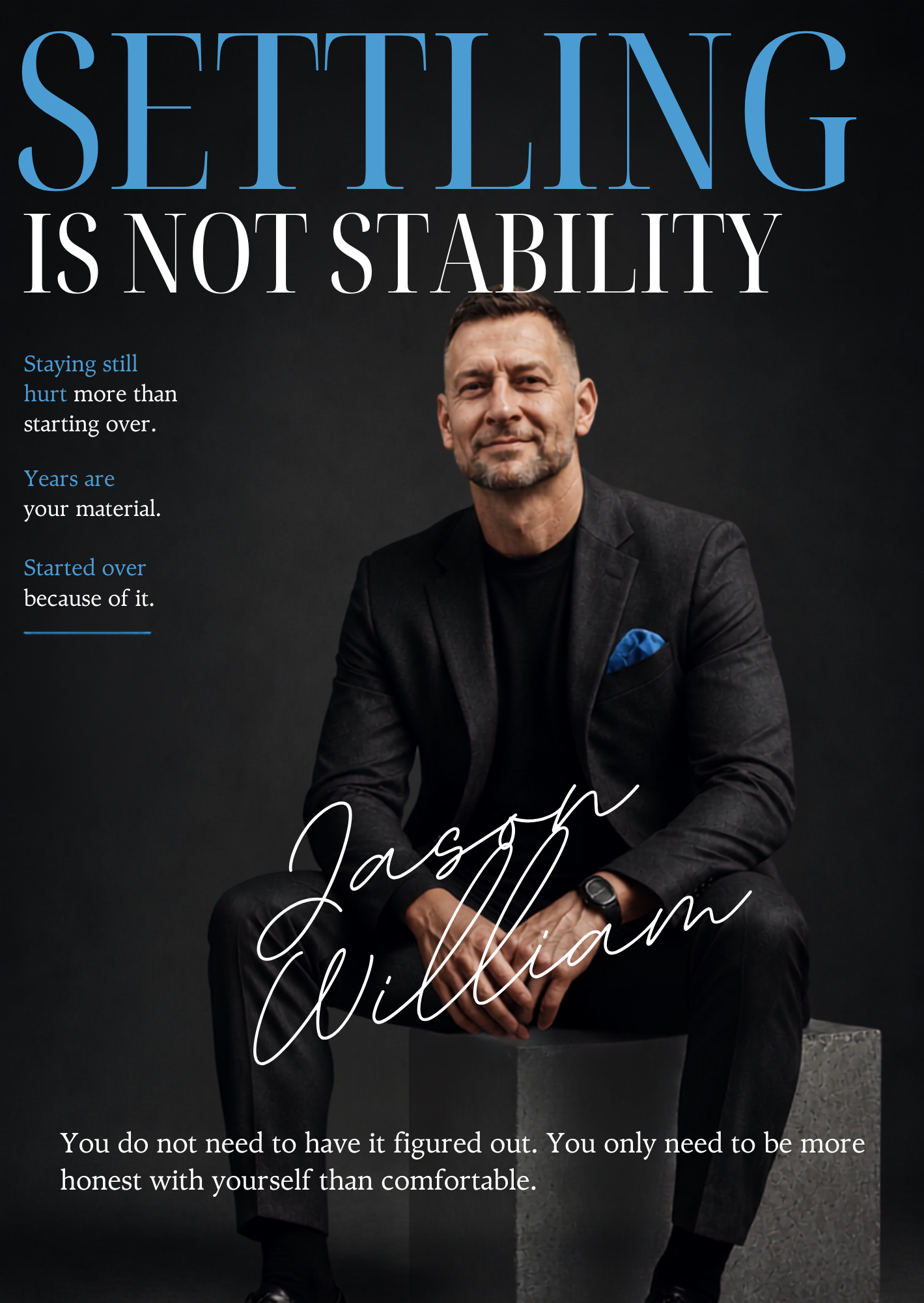
I did not start over because I had a five-year plan and a clear runway. I started over because staying still had become more painful than the uncertainty of building something new.
Why I Did Not Wait Until It Felt Safe
If I had waited for the moment everything felt settled enough to take a risk, I would still be waiting. There is no age where starting something new stops feeling exposed. There is no amount of credibility that fully protects you from the discomfort of being a beginner again at
something, in public, while people who have known you for years watch and wonder what you are doing.
I wrote a book that puts my entire story on the record, including the parts I spent years not talking about. I built a business from nothing, in an industry I had no prior background in, after a quarter century of being known for something else entirely. I did both of these things well past the point most people consider it reasonable to pivot. I did them anyway, not because I had stopped being afraid, but because I had finally stopped letting fear be the thing that decided what I built.
I think this is the part people misunderstand most about reinvention later in life. It is not the absence of fear. It is the decision to build something honest in spite of it.
What I Have Learned About Settling Down Too Early
I have spent twenty-five years around young people trying to figure out who they are, and I have watched the opposite mistake happen just as often in people my own age and older. Settling is not the same as stability. Settling is often just fear wearing the costume of maturity. It tells you that wanting more at this stage of life is immature, that the questions you are asking should have been resolved years ago, that wanting to build something new now is somehow undignified.
I do not believe that. I believe the version of yourself you have spent decades becoming, the one who has survived disappointment, fractured relationships, professional setbacks, and the slow work of rebuilding trust in yourself, is far better equipped to build something honest than the version of you that existed twenty years earlier. Younger versions of us often build from ambition alone. What I had access to, finally, in my forties, was something ambition cannot manufacture on its own: clarity about what was actually worth building, and the humility to know what needed to change in me before I tried to build it.
What I Am Actually Asking You to Consider
I am not telling you this story so you will admire it. I am telling you this story because I suspect some of you reading this are sitting exactly where I sat, carrying a quiet conviction that there is more for you, while an equally loud voice tells you it is too late, too risky, too undignified at your age to start again.
I want to tell you plainly. It is not too late. The years you have already lived are not a disqualification. They are the only real material you have to build something true with. I did not start over in spite of everything I had already lived through. I started over because of it. The book I wrote and the business I built did not happen before the hard years. They happened after, and they could only have happened after, because it took every bit of that time to finally know what was worth building and what I needed to leave behind.
If you are waiting for permission to begin again, this is mine to you. You do not need to have it figured out. You only need to be more honest with yourself than comfortable, and willing to start building before it feels safe to.