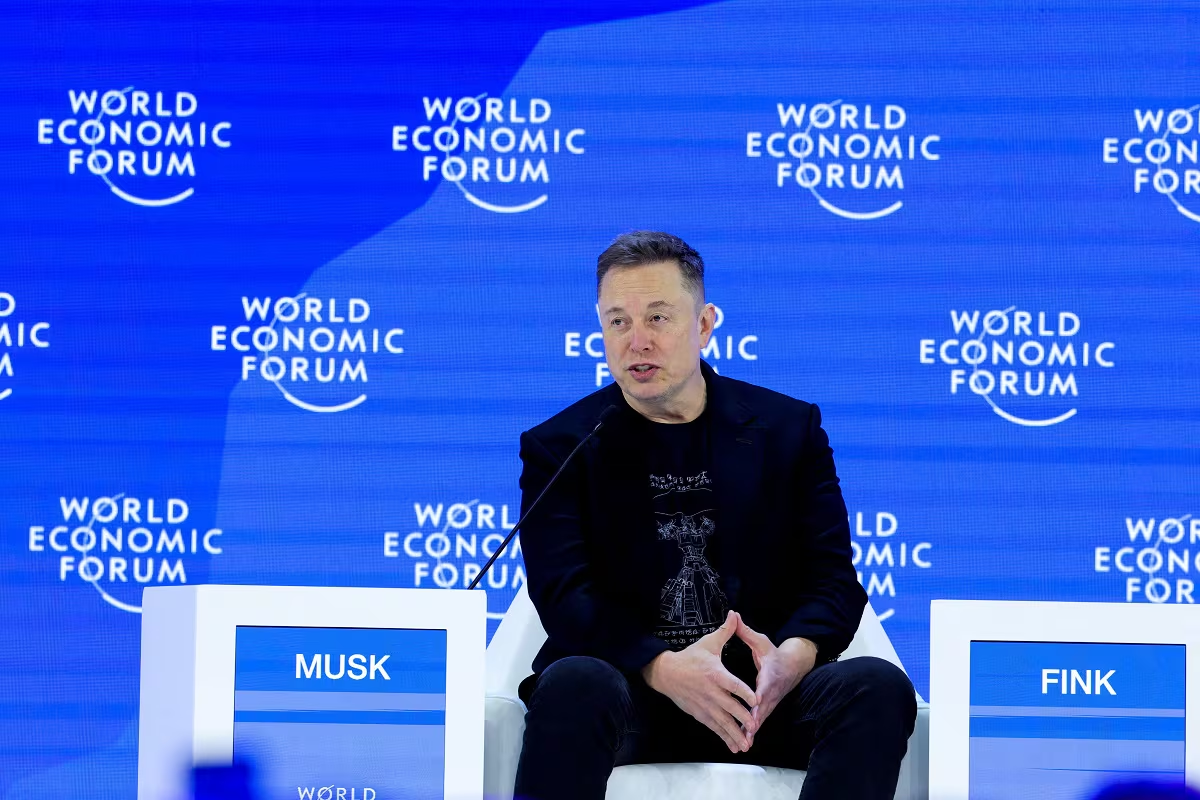
Chinese solar shares surge amid reports of visits from SpaceX and Tesla staff, after local media said teams connected to Elon Musk recently toured several photovoltaic suppliers across China. The reports ignited market speculation that a marquee customer could accelerate demand for next-generation solar technologies, sending sector stocks sharply higher.
The rally followed comments from Musk earlier this month that he plans to build large-scale solar cell manufacturing capacity in the United States—fueling talk that global tech players may be moving deeper into the energy supply chain.
Shares of JinkoSolar, one of the world’s largest solar panel makers, leapt as much as 20% in early trading, hitting their daily limit, according to LSEG data. Jolywood Suzhou Sunwatt, a producer of photovoltaic auxiliary materials, also surged 20%. Other major manufacturers joined the move: Trina Solar climbed 8.9%, Shenzhen Topraysolar rose 10%, and the CSI All Share Solar Power Equipment Sub-Industry Index gained 6.8%.
Focus on next-generation solar tech
According to local reports, a team linked to Musk visited a range of Chinese photovoltaic companies involved in equipment manufacturing, silicon wafers, battery modules, and emerging perovskite technology. Sources said the visitors showed particular interest in heterojunction and perovskite approaches—advanced methods designed to improve solar cell efficiency and potentially reduce costs once manufacturing hurdles are cleared.
State-backed outlet Cailianshe reported that the visitors were from SpaceX and Tesla. Separately, 21st Century Business Herald said JinkoSolar confirmed receiving a Musk-linked delegation, though it did not disclose any concrete business discussions. CNBC was unable to independently verify the reports, and SpaceX, Tesla, and JinkoSolar did not immediately respond to requests for comment.
Momentum over fundamentals—for now
Market participants cautioned that the rally appears driven more by sentiment than by immediate changes in company fundamentals. Ke Zong, a portfolio manager at a Shanghai-based quantitative fund, said the surge reflects a growing narrative that energy—not computing power—remains the key bottleneck for artificial intelligence.
“Musk’s apparent interest in solar is being read as a signal that tech giants are moving upstream into power,” Zong said. “But there hasn’t been a material shift in order books. The move was largely momentum trading and short-covering.”
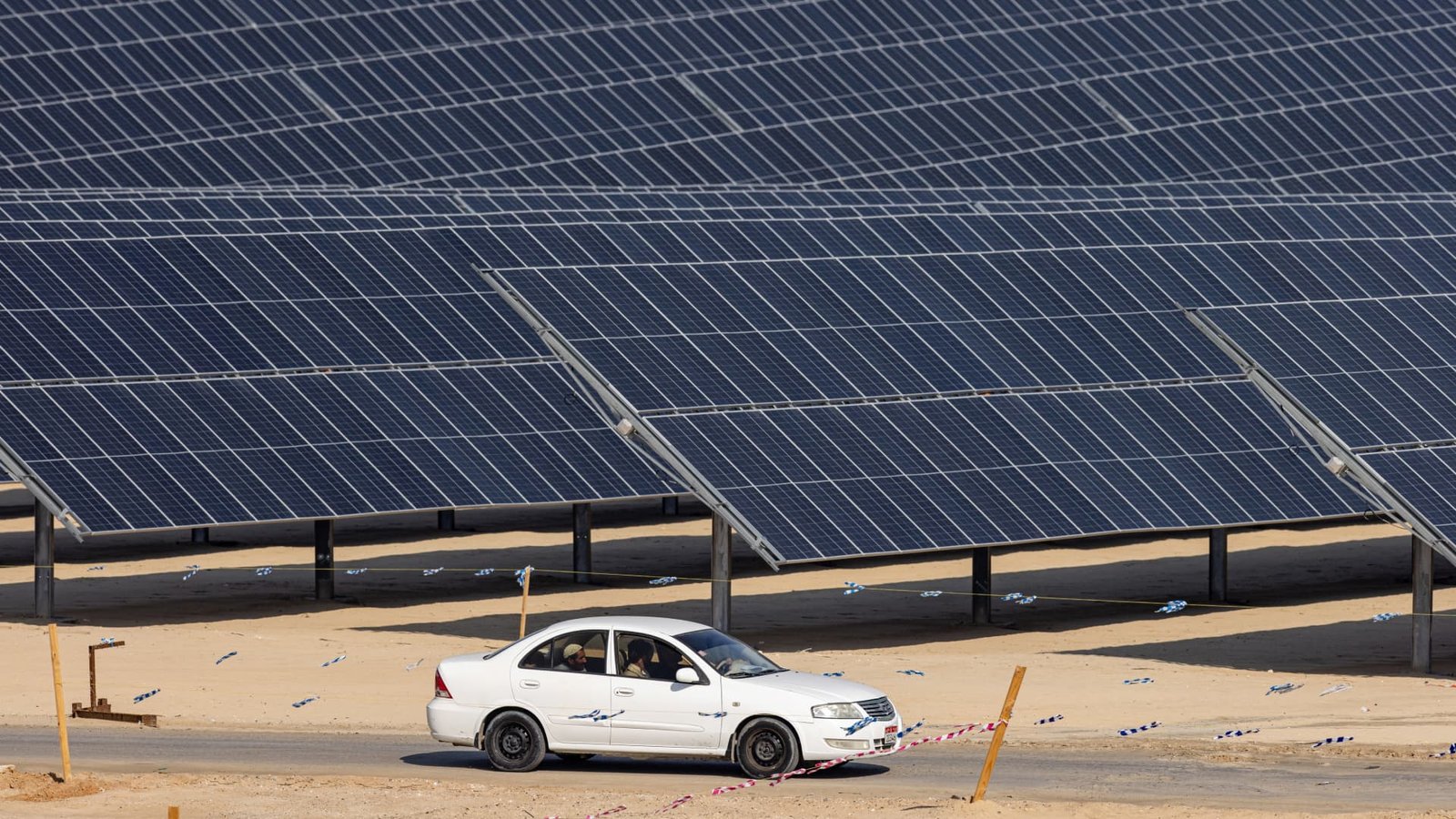
Musk reinforced investor enthusiasm during a recent Tesla earnings call, saying he aims to build 100 gigawatts of solar cell capacity in the U.S. “The solar opportunity is underestimated,” he said.
Structural challenges still loom
China dominates global solar manufacturing, but years of heavy state-backed investment have created a supply glut. That oversupply has driven module prices sharply lower, squeezing margins and accelerating consolidation across the industry. Despite the price slump, leading producers have continued to add capacity, intensifying competitive pressures.
In response, some manufacturers have expanded production overseas—particularly in the U.S., where tariffs shield domestic producers from low-cost imports from China and Southeast Asia. JinkoSolar, for example, plans to build more than 12 gigawatts of wafer, cell, and module capacity in Southeast Asia by the end of 2030 and operates a Florida factory capable of producing about 1.2 million panels annually.
Valuations stretched, outlook intact
After the recent surge, many solar stocks now appear “fully valued or overvalued,” said Cheng Wang, an equity analyst at Morningstar, while maintaining a constructive long-term view on the sector. Even if Chinese suppliers were to land contracts tied to SpaceX, Wang noted, the revenue impact would likely be limited.
“Space-based solar remains economically marginal,” he said. “While the concept is fascinating, its scale will likely stay negligible compared with ground-based installations until launch and deployment costs come down substantially.”
For now, the market’s reaction underscores how quickly sentiment can shift in China’s solar sector—especially when the name Elon Musk enters the conversation—even as structural challenges continue to weigh on fundamentals.
- Ensuring effective AI in insurance operations
- I studied over 200 children, and the happiest among them all had parents who followed six nightly routines
- Research finds UK young adults are open to using AI for financial advice
- Dr. Gaurav Sinha’s Cross-Asset Analysis Signals Oil Reversal and Crypto Base Formation